Your gas hot water system won’t last forever. Understanding its expected lifespan and recognising the warning signs of failure helps you plan ahead, avoiding the inconvenience of unexpected breakdowns.
We founded Hot Water System Perth to solve a specific problem we saw repeatedly across Western Australian homes: people waiting until a tank burst to think about their hot water. Proactive monitoring saves money and prevents property damage. Our team wants to help you identify the exact moment your unit shifts from “reliable” to “risk.”
Here is the breakdown of what the data says about your system’s longevity and the physical signs that it is time to call a professional.
Expected Lifespan by Type
We find that the type of technology you use is the biggest predictor of longevity. Storage tanks and continuous flow units age very differently.
Gas Storage Hot Water Systems
Typical lifespan: 8-12 years
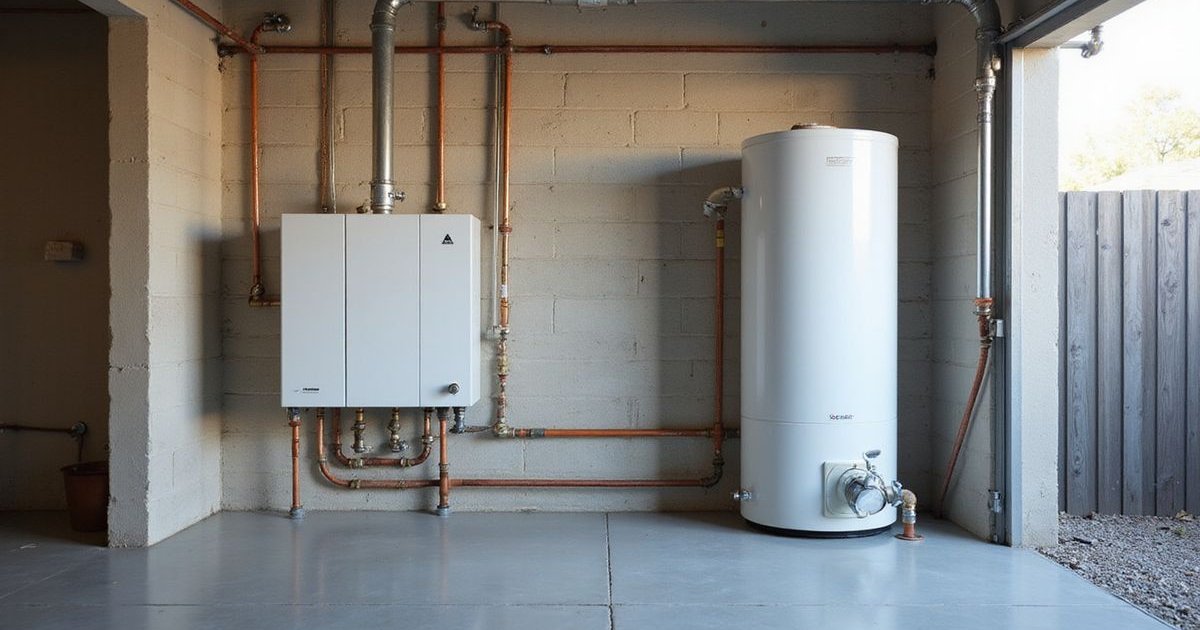
Gas storage systems have steel tanks that hold hot water 24/7. These tanks eventually succumb to the elements.
We see the following factors drive this lifespan:
- Water quality: Perth suburbs with high calcium levels accelerate internal rust.
- Anode maintenance: The sacrificial anode is a metal rod designed to rust so your tank doesn’t.
- Usage patterns: Large families draining the tank daily force the burner to cycle more often.
- Installation quality: Tanks sitting directly on soil or without proper drainage fail faster.
- Service history: Flushing sediment yearly can add two to three years to the unit’s life.
What usually fails:
- Tank corrosion (terminal)
- Thermostat
- Gas control valve (Unitrol)
- Pilot assembly
- Main burner components
Gas Continuous Flow (Instantaneous)
Typical lifespan: 15-20 years
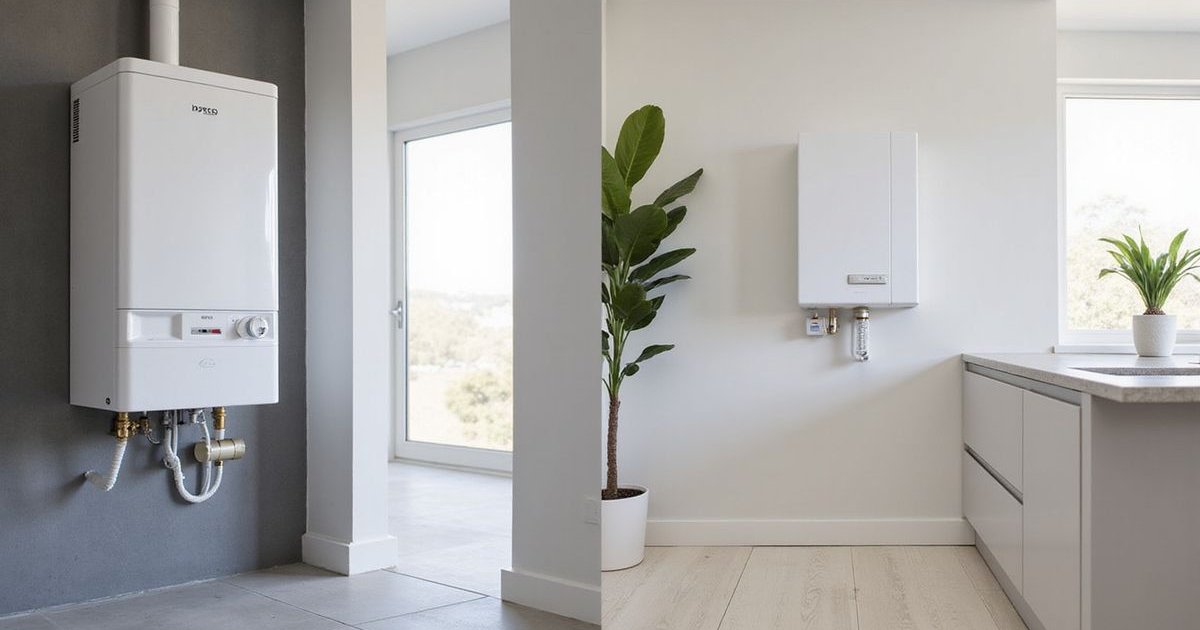
These systems heat water only when you turn on the tap. Without a tank of standing water to corrode, they naturally last longer.
Our technicians generally regard these components as the critical wear points:
- Heat exchanger: This copper pipework takes the brunt of the heat and can suffer from scale.
- Electronics: Modern units are computer-controlled and circuit boards can degrade over time.
- Gas components: Solenoids and modulation valves work harder in these units than in storage systems.
What usually fails:
- Printed Circuit Board (PCB)
- Heat exchanger (calcium scale blockage)
- Water flow sensor
- Ignition electrodes
- Gas modulation valve
Warning Signs Your System Is Failing
We recommend checking your system for these physical indicators at least once every six months. Catching these early can save you from a flooded laundry or garage.
Signs Common to All Gas Systems
1. Age
You can find the manufacture date on the data plate sticker, usually located on the side of the unit.
We use this general rule of thumb for replacement planning:
- Storage over 10 years: You are on borrowed time.
- Continuous flow over 15 years: Start saving for a modern replacement.
2. Rusty Water
Red or brown water coming from your hot tap is a major red flag.
Our experience tells us this usually points to one of two things:
- Storage tanks: The inner lining has failed and the steel tank is rusting.
- Continuous flow: The copper heat exchanger is oxidizing or inlet pipes are corroded.
3. Strange Noises
Your hot water unit should be relatively quiet.
We listen for these specific sounds during inspections:
- Rumbling (Kettling): Hardened sediment is boiling at the bottom of the storage tank.
- Popping: Water trapped under scale is flashing into steam instantly.
- Whistling: Gas pressure is incorrect or the burner jets are clogged.
- Clicking: The spark igniter is failing to light the gas (common in continuous flow).
4. Inconsistent Temperatures
Water that fluctuates between hot and cold suggests the system is struggling to regulate flow or flame.
Possible causes include:
- Thermostat losing calibration.
- Diaphragm wear in the water valve.
- Scale buildup insulating the temperature sensors.
- Gas pressure dropping intermittently.
5. Pilot Light Problems (Older Systems)
If you have to relight your pilot light weekly, something is wrong.
We typically trace this issue to:
- A worn-out thermocouple.
- Debris blocking the pilot injector.
- Strong draughts blowing out the flame.
- A faulty gas control valve.
6. Yellow Burner Flame
A proper gas flame should be crisp and blue.
Yellow or orange flames are dangerous because they indicate:
- Incomplete combustion.
- Blocked burner ports preventing air mix.
- Warning: This can produce deadly carbon monoxide. Call a pro immediately.
7. Water Around the Base
Puddles near your heater are never a good sign.
Our team investigates these three sources first:
- PTR Valve: The pressure relief valve might be venting excess pressure.
- Tank Leak: If the cylinder has split, the unit must be replaced.
- Connection Leak: Sometimes it is just a loose nut on the inlet pipe.
8. Rising Energy Bills
A spike in your gas bill without a change in habits often points to the hot water unit.
Efficiency drops when:
- Sediment layers insulate the water from the gas burner.
- Thermostats fail and overheat the water.
- The system cycles on and off unnecessarily.
Specific to Storage Systems
Tank Corrosion
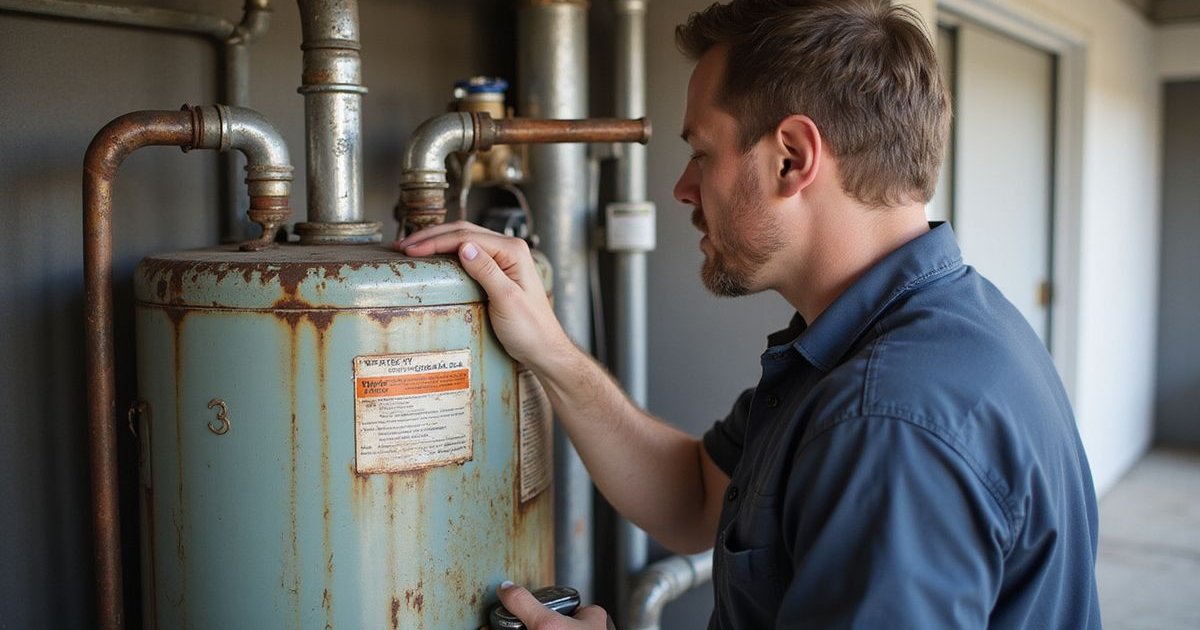
Rust on the outside casing usually means the inside is far worse.
We warn customers that:
- Corrosion often starts at the bottom weld seam.
- Once a tank leaks, it cannot be patched safely.
- Internal enamel failure happens long before external rust appears.
Anode Rod Condition
This magnesium rod is the single most important part for tank longevity.
Our maintenance protocol includes:
- Checking the anode every 3 to 5 years.
- Replacing it once it is 50% depleted.
- Noting that a depleted anode leaves the steel tank completely unprotected.
Sediment Buildup
Perth water contains minerals that settle at the bottom of the tank as sludge.
This layer causes:
- Reduced heating efficiency (higher bills).
- Loud banging noises during heating cycles.
- Blockages in the drain valve.
- Tip: Flushing a few litres of water from the bottom valve every six months helps manage this.
Specific to Continuous Flow Systems
Error Codes
Digital controllers on units like Rinnai or Rheem will flash a code when something fails.
We suggest you:
- Note the number flashing on the remote or unit (e.g., Code 11 or 12).
- Check the owner’s manual for the specific meaning.
- Call a technician with the code ready to save diagnostic time.
Reduced Flow Rate
Scale buildup inside the narrow copper pipes restricts water passage.
This manifests as:
- Low pressure at the showerhead.
- The unit shutting off because flow drops below the minimum activation rate.
- Clogged inlet water filters.
Longer Delay Before Hot Water
If the water takes longer to get hot than it used to, the unit is hesitating.
Common culprits are:
- Slow ignition response.
- Servo motors taking too long to adjust gas flow.
- Heat transfer becoming inefficient due to internal fouling.
The Repair vs Replace Decision
Deciding between fixing an old unit and buying a new one comes down to mathematics and age. We use the “50% Rule” as a baseline for our recommendations.
Factors Favouring Repair
- System is under 7 years old (storage) or 12 years (continuous flow).
- This is the first major component failure.
- The issue is minor, such as a thermocouple or relief valve.
- Repair costs are less than half the price of a new installed unit.
- The tank or heat exchanger shows no signs of corrosion.
Factors Favouring Replacement
- System is over 10 years old (storage) or 15 years (continuous flow).
- The storage tank has developed a leak (this is non-negotiable).
- You have paid for multiple repairs in the last 18 months.
- The repair quote exceeds 50% of the replacement cost.
- Spare parts are obsolete or require ordering from overseas.
- You want to switch to a 5-star energy efficient model.
Cost Considerations
We created this comparison to show the real cost of ownership over time. All figures are estimates based on 2026 Perth market rates.
| Scenario | Immediate Cost | Future Risks | Total 3-Year Outlook |
|---|---|---|---|
| Repair Old Unit | $450 - $650 | High risk of secondary failure ($600+) | $1,500+ (plus eventual replacement) |
| Install New Unit | $2,200 - $3,200 | Covered by 10-12 year warranty | $2,200 - $3,200 (with lower gas bills) |
Replacement often works out cheaper when you factor in the energy savings of a new 5-star unit and the elimination of repair call-out fees.
Extending Your System’s Life
You can delay the cost of replacement with a few simple habits. We encourage all homeowners to take ownership of their system’s maintenance.
Regular Maintenance
An annual check-up prevents small issues from becoming tank-killers.
Our technicians perform these tasks during a standard service:
- Cleaning the burner assembly and pilot injector.
- Testing the Pressure Temperature Relief (PTR) valve.
- Checking gas pressures against the data plate specs.
- Inspecting the flue for safe carbon monoxide venting.
- Assessing the anode rod depletion level.
Water Quality
Perth’s water supply varies significantly by suburb.
We know that:
- Coastal suburbs and areas near limestone often have “harder” water.
- Mineral scale builds up faster in these zones.
- Installing a scale inhibition system on the cold water inlet can double the life of a continuous flow unit.
Proper Installation
The initial setup dictates how well the unit survives the elements.
We verify that:
- Gas pressure is correctly adjusted to prevent overheating.
- The unit sits on a proper concrete slab or plinth, not dirt.
- There is adequate clearance for ventilation.
- The flue is installed to Australian Standards (AS 3500) to prevent backdrafts.
Anode Replacement (Storage Systems)
The anode is the unsung hero of your storage system.
We advise you to:
- Locate the large nut on top of your storage tank (that’s the anode access).
- Have it checked every 3-5 years without fail.
- Replace it immediately if the core wire is exposed.
Planning for Replacement
Don’t Wait for Failure
Rushing to buy a hot water system because yours burst on a Friday night usually leads to paying premium emergency rates.
We recommend a proactive approach:
- Research brands like Rheem, Rinnai, and Dux while your current unit works.
- Get three written quotes to compare installation inclusions.
- Check if your gas pipe sizing needs an upgrade for a larger unit.
- Avoid the “panic tax” of emergency after-hours installation.
Upgrade Opportunities
Replacing a dead unit is the perfect time to rethink your energy usage.
You might consider:
- Switching to Continuous Flow: You gain endless hot water and reclaim the space taken up by the big tank.
- Heat Pump Conversion: While electric, these are highly efficient and often eligible for STC government rebates.
- Upsizing: If your family has grown, a 135L tank might need to become a 170L unit.
Budget Planning
Financial surprises are never welcome.
We suggest:
- Setting aside $2,500 - $3,000 once your system passes the 10-year mark.
- Asking about interest-free payment plans, which many plumbing companies now offer.
- Checking if you qualify for any local energy efficiency rebates.
When to Call a Professional
Some signs require immediate expert intervention to ensure safety.
Immediate Attention Required
- Gas smell: Turn off the gas meter valve immediately, open windows, and call a licensed gas fitter.
- Yellow flames: This suggests carbon monoxide production. Stop using the unit.
- Major leaks: Turn off the water isolation valve at the base of the heater to prevent structural damage.
- Scalding water: If water is steaming hot unexpectedly, the tempering valve has failed.
Schedule Soon
- Rusty water appearing in the bath.
- Water temperature fluctuating during a shower.
- New noises like banging or whistling.
- The unit reaching its expected lifespan end date.
Routine Service
- Every 12 months for a general safety check.
- Every 3 to 5 years specifically for anode replacement.
- Every 6 months for a DIY relief valve check (pull the lever gently to ensure it flows).
Get an Assessment
At Hot Water System Perth, we provide honest assessments of gas hot water systems. If yours is showing signs of age, we’ll tell you whether repair makes sense or replacement is the better investment.
Our assessment includes:
- System condition evaluation
- Remaining life estimate
- Repair options if applicable
- Replacement recommendations
- Clear pricing for all options
Contact us to schedule an assessment and know where your hot water system stands.