Your hot water system has failed or is showing signs of struggle. Whether you need hot water repairs or a complete replacement is the moment every homeowner dreads. You are now standing in a cold shower facing a tough financial question. Should you pay for a repair or invest in a brand new unit?
We established Hot Water System Perth in 2021 to help locals answer this exact question. Our team sees this scenario daily across Western Australia.
Making the wrong choice here is expensive. Fixing a dying unit throws money away, but replacing a repairable system wastes a perfectly good asset.
This guide breaks down the data to help you decide.
The 50% Rule: A Baseline Calculation
Industry experts often cite the 50% rule as a primary filter. If the quote to repair your current unit exceeds 50% of the cost of a replacement, you should generally replace it.
This formula provides a quick sanity check.
But you need to apply this rule to the total cost of replacement. That includes installation, valves, and disposal of the old unit.
We suggest adding a warranty variable to this calculation. A repair typically comes with a 3-month warranty on that specific part. A new system usually offers a 10-year warranty on the cylinder.
Key Factors in Your Decision
You need to look beyond the immediate price tag. Several specific variables dictate the true value of your system.
1. Age of the System
Every hot water unit has an expiration date. Water quality in Australia, particularly in areas with hard water, aggressively attacks cylinder linings over time.
Check the manufacturing date on the sticker on the side of your tank.
| System Type | Typical Lifespan (AU) | Danger Zone (Replace) |
|---|---|---|
| Electric Storage | 8-12 years | 10+ years |
| Gas Storage | 8-12 years | 10+ years |
| Gas Continuous Flow | 15-20 years | 15+ years |
| Heat Pump | 10-15 years | 12+ years |
| Solar (tank) | 10-15 years | 12+ years |
| Solar (collectors) | 20+ years | N/A |
If your system is beyond 75% of these lifespans, spending money on repairs is risky. The tank is likely nearing fatigue, and fixing a valve won’t stop a cylinder leak next month.
2. Type of Failure
The specific component that failed tells us a lot about the system’s remaining health. Some parts are designed to be swapped, while others signal terminal illness.
Repair-Friendly Failures:
- Heating Element (Electric): This is a common wear-and-tear part.
- Thermostat: Simple electrical replacements are standard.
- Thermocouple (Gas): If your pilot light won’t stay on, this small sensor is usually the culprit.
- Relief Valves: Leaking Pressure Temperature Relief (PTR) valves are routine maintenance.
Failures Suggesting Replacement:
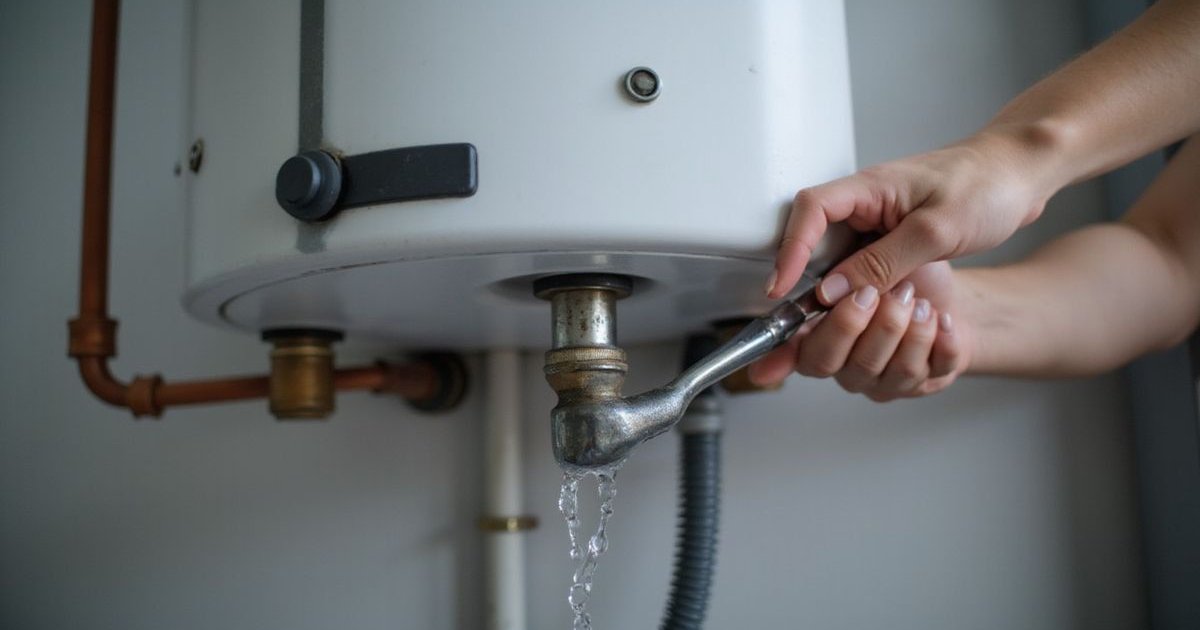
- Cylinder Leaks: If water is pooling at the bottom of the tank itself, the vessel has breached. This is not repairable.
- Sacrificial Anode Depletion: If the anode hasn’t been checked in 8 years and the tank is rusting, the internal damage is likely extensive.
- Compressor Failure (Heat Pumps): Replacing a compressor on an old heat pump is rarely cost-effective compared to a new unit.
3. Repair History
Review the track record of your specific unit.
- First failure in 6 years? A repair is usually a smart move.
- Second failure in 12 months? The system is likely starting a cascade of failures.
- Rusty water? Brown or copper-colored water suggests internal corrosion is advanced.
We often see homeowners spend $400 on a thermostat, only to have the element blow two weeks later. Recognizing a pattern early saves your wallet.
4. Running Costs and Efficiency
Old systems are energy hogs. A standard electric storage water heater is often the single biggest contributor to a household electricity bill in Perth.
Continuing to run a 10-year-old electric system is a “hidden” cost.
Estimated Annual Running Costs (AU Averages):
- Old Electric Storage: $900 - $1,300
- Gas Storage (3-Star): $600 - $800
- Modern Heat Pump: $250 - $400
The difference is staggering. Swapping a standard electric tank for a modern heat pump can save over $700 annually. That savings pays for the new unit in roughly 3 to 4 years.
5. Australian Rebates and Incentives
You cannot make this decision without looking at government incentives.
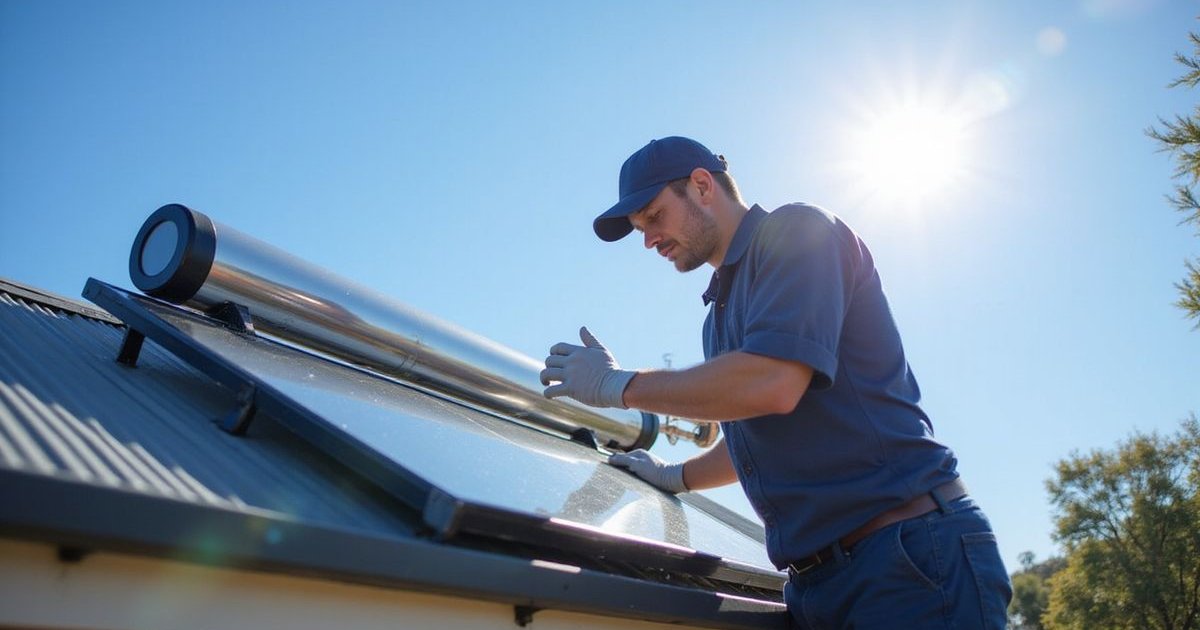
Australia has aggressive schemes to move homes away from inefficient energy use. Federal Small-scale Technology Certificates (STCs) drastically reduce the upfront cost of heat pumps and solar hot water systems.
These rebates function as a point-of-sale discount.
The Financial Impact:
- A new heat pump might list for $3,500.
- STC rebates can strip $1,000 or more off that price.
- The gap between a “cheap” replacement and a high-efficiency upgrade shrinks significantly.
We always check current rebate eligibility before recommending a simple like-for-like replacement.
6. Available Technology
Technology has shifted since you last bought a water heater.
- Solar “Sponge” Potential: If you have rooftop solar panels, a heat pump acts as a thermal battery. It runs during the day for free using your excess solar power.
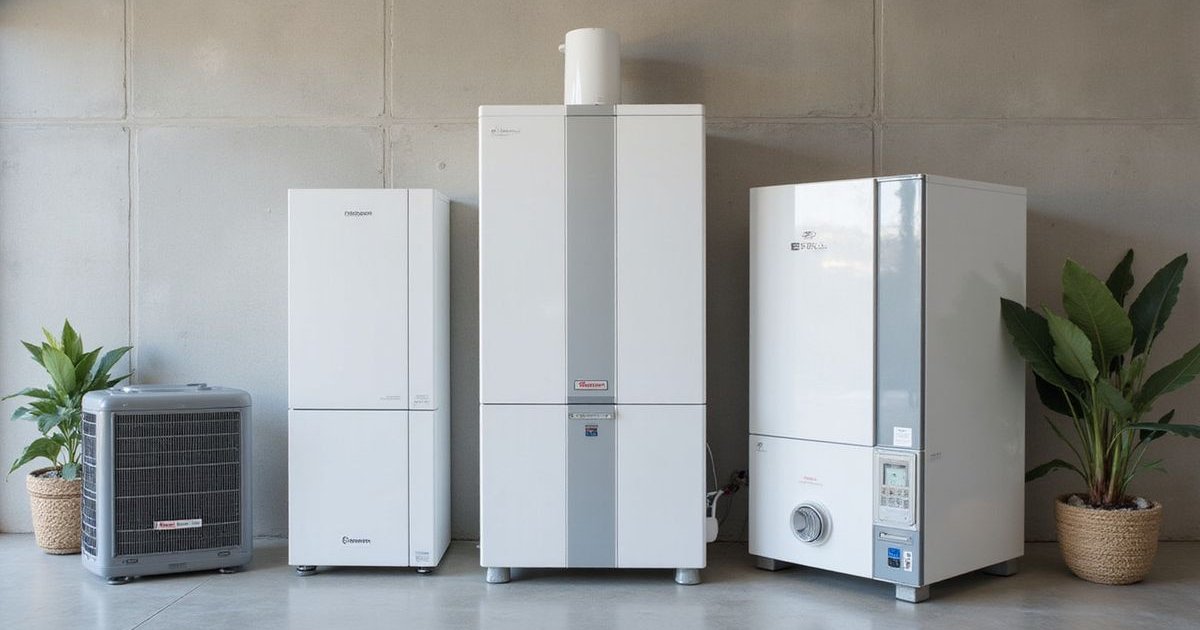
- Continuous Flow Gas: These units never run out of hot water and only burn gas when the tap is on. They are far superior to old gas storage tanks.
Real-World Decision Examples
Here is how we apply these factors in actual Perth homes.
Case Study 1: The Simple Fix
Situation: A 6-year-old Rheem electric storage system has a blown element.
- Diagnosis: Failed heating element.
- Cost: ~$300 for supply and fit.
- Condition: Tank is clean with no rust marks.
- Verdict: Repair. The unit is young, and the repair cost is low relative to replacement.
Case Study 2: The Money Pit
Situation: A 13-year-old Dux gas storage unit. The pilot light keeps going out, and there is a slow drip from the base.
- Diagnosis: Failed thermocouple and minor tank breach.
- Cost: Impossible to repair the tank leak.
- Verdict: Replace immediately. The tank has failed. Even if the leak was fixable, the age makes it a liability.
Case Study 3: The Efficiency Upgrade
Situation: A 9-year-old electric storage unit. The thermostat has failed.
- Cost to Repair: $350.
- Replacement Option: Upgrade to a high-efficiency Heat Pump.
- Analysis: The repair is affordable, but the system costs $1,100 a year to run.
- Verdict: Consider Replacement. While repairable, the homeowner chose to upgrade. The $700 annual energy savings and STC rebates made the new unit a smarter financial move than keeping the old energy-guzzler alive.
Questions to Ask Yourself
Run through this checklist before approving a quote:
- How long do I plan to live here? If you are selling in 6 months, a repair might suffice. If staying 5 years, invest in efficiency.
- What is my risk tolerance? Can you handle another cold shower next month if a different part breaks?
- Do I have solar panels? If yes, moving to an electric-boosted solar or heat pump system is almost always the right financial play.
- Are rebates available right now? Ask your installer about current federal or state incentives.
Getting Honest Advice
Our team at Hot Water System Perth focuses on data, not sales pressure. You will get a straight answer on whether your system has life left in it.
We earn our reputation by saving you money in the long run. Sometimes that means fixing a $200 valve. Other times, it means advising you that a repair is a bad investment.
Our Assessment Process
When we arrive at your property, we follow a strict protocol:
- Isolate the Fault: We test components to find the exact failure point.
- Check the Date: We verify the cylinder age and warranty status.
- Inspect the Cylinder: We look for tell-tale signs of corrosion or bulging.
- Calculate the ROI: We compare the repair bill against the cost (and savings) of a new system.
- Explain the Options: You get the facts, the prices, and our professional recommendation.
Schedule an Assessment
Do not guess with your hot water supply. If your system is leaking, making strange noises, or leaving you cold, contact us today.
We will provide a clear, honest assessment to help you make the right call for your home and budget.