See a puddle spreading across your floor is a stomach-dropping moment.
You instantly worry about the mess, the potential damage, and the inevitable repair bill.
Since we established Hot Water System Perth in 2021, our team has responded to thousands of hot water repair calls just like this.
Experience has taught us that panic often leads to expensive mistakes.
A 2024 report by QBE Insurance indicated that water damage is one of the most common home insurance claims in Australia, with escape of liquid ranking high on the list.
The good news is that not every puddle means your tank has burst.
We are going to walk you through exactly how to diagnose the issue, secure your home, and decide if you need a plumber.
First Steps: Assess the Situation
Before you reach for the phone, take a moment to evaluate the scene.
Speed is important, but accuracy saves you money.
Is It Actually a Leak?
Water pooling around the base of a unit does not always signal a catastrophe.
Normal water sources include:
- Condensation: Heat pumps and gas storage units can generate significant condensation, especially during humid Perth winters.
- Relief Valve Discharge: Your Temperature Pressure Relief (TPR) valve is designed to drip small amounts of water during heating cycles.
- Rainwater Accumulation: Heavy downpours can pool around outdoor units, mimicking a leak.
- Roof Runoff: Overflow from blocked gutters above a system often drips directly onto the unit.
Signs of actual leaks:
- Continuous water flow that does not stop after a heating cycle.
- Water emerging directly from pipe connections or the cylinder seam.
- Damp or sagging insulation on the tank jacket.
- Puddles that grow rapidly within 15 minutes.
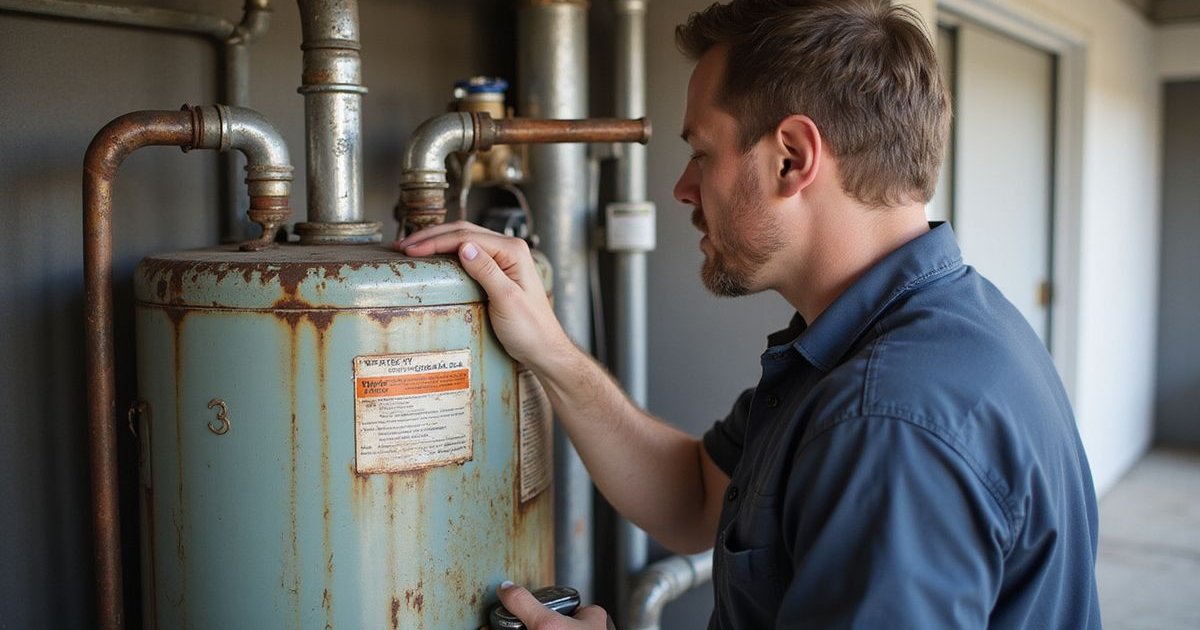
- Rust-coloured stains trailing down the side of the tank.
How Serious Is It?
You need to categorize the urgency to make the right safety decisions.
Minor leak:
- Slow dripping (fewer than 10 drops per minute).
- The water is easily contained with a small bucket.
- No electrical components are wet.
- The system still provides hot water.
Moderate leak:
- A steady trickle or stream.
- You need to empty a bucket every few hours.
- Performance is dropping, and water is lukewarm.
Severe leak:
- Heavy flow that looks like an open tap.
- Water is spreading to walls, carpets, or cabinetry.
- You hear hissing sounds or smell burning.
- The system has shut down completely.
Immediate Actions
Safety comes first.
Follow these steps to protect your home and your family.
1. Turn Off the Power
Water and electricity are a dangerous combination.
Electric systems:
- Go to your switchboard (meter box).
- Locate the switch labelled “Hot Water” or “HWS.”
- Flip it to the “OFF” position.
Gas systems:
- Locate the gas control dial on the unit itself.
- Turn it to the “Pilot” or “Off” setting.
- Smell gas? Turn off the main gas supply at your meter immediately and evacuate.
Heat pumps:
- Switch off the isolator switch located next to the unit.
- Flip the circuit breaker at the main switchboard to be safe.
2. Turn Off the Water Supply
Stopping the flow prevents further damage to your property.
Dedicated hot water isolation: Look for a small tap or knob on the cold water inlet pipe leading into the bottom of your tank.
- Turn this valve clockwise until it stops.
- This stops water from entering the tank but keeps water on for the rest of the house.
Mains water isolation: If the isolation valve is stuck or you cannot find it, go to your mains meter.
- This is usually located near the front property boundary.
- Turn the tap clockwise to shut off all water to the property.
3. Minimise Water Damage
Once the supply is isolated, you need to manage the standing water.
Damage control steps:
- Place a large bucket or tray under the drip point.
- Lay down old towels to create a dam preventing water from reaching carpet or timber floors.
- Move furniture and boxes away from the immediate area.
- Check adjoining rooms for dampness on shared walls.
Identifying the Leak Source
With the area safe, you can look closer to tell us exactly what is wrong.
Relief Valve Discharge
What it looks like:
- Water dripping from the small copper drain line running down the side of the unit.
- This usually empties into a drain or onto the ground.
Why it happens: Australian Standard AS 3500.4 requires these valves to release water to relieve pressure.
- Blockages or debris under the valve seat can cause it to stick open.
- If it runs continuously like a tap, the valve has likely failed.
When to worry:
- If the flow is constant for more than 20 minutes.
- If the water is cold (indicating it is flowing straight through without heating).
Inlet/Outlet Connections
What it looks like:
- Moisture around the nuts where pipes enter or exit the tank.
- Green or white powdery corrosion on brass fittings.
Common causes:
- Vibration over time loosens compression fittings.
- Washer seals inside the nuts degrade after 5-10 years.
- “Hard water” (common in parts of WA) accelerates corrosion on brass.
Assessment:
- Dry the area with a rag.
- Watch closely for 2 minutes to see exactly where the bead of water forms.
- This is often a simple repair rather than a system replacement.
Tank Body Leak (Storage Systems)
What it looks like:
- Water bubbling up from the top of the tank.
- Leaks appearing from the bottom seam where the cylinder meets the base.
- Rust bubbles pushing through the painted outer casing.
What it means: The internal steel cylinder has corroded through.
- This is a terminal failure.
- Repair is impossible; the unit must be replaced.
Heat Exchanger Leak (Continuous Flow/Heat Pumps)
What it looks like:
- Water dripping from inside the casing of a tankless gas unit.
- Error codes flashing on the digital controller.
What it means: The copper heat exchanger inside the unit has split or pinholed.
- This can happen due to age or high water pressure.
- Repairs are possible but often cost nearly as much as a new unit.
Piping Leaks
What it looks like:
- Water spraying from a pinhole in the copper pipe leading to the unit.
- Damp spots in the wall behind the system.
What it means: The plumbing infrastructure has failed, not the unit itself.
- A plumber can cut out and replace the damaged section of pipe.
- The hot water system itself is likely fine.
What You Can Do Yourself
We recommend a few safe checks you can perform before booking a service.
Tighten Loose Connections
If fittings look loose:
- Confirm the power and water are definitely off.
- Use an adjustable wrench (shifter).
- Apply gentle pressure to tighten the nut clockwise—about 1/8th of a turn.
- Turn the water back on slowly and check for leaks.
Caution: Do not over-tighten. This can strip the thread or crack the olive seal, making the leak worse.
Check the Relief Valve
If the valve is dripping:
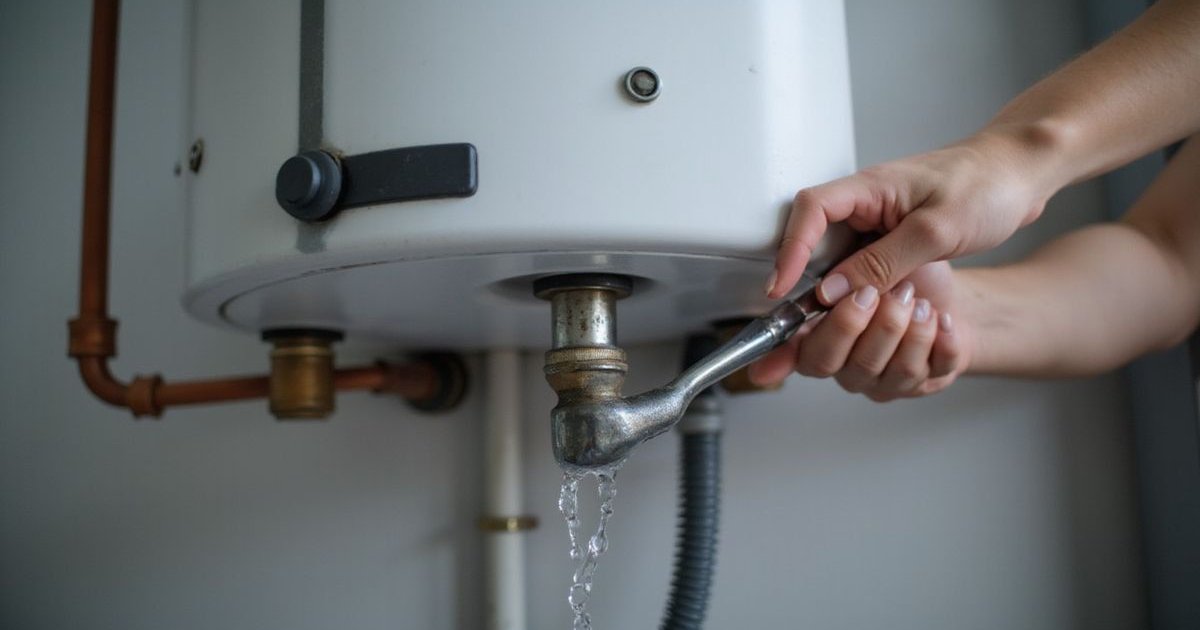
- Gently lift the lever on top of the valve for 5 seconds to flush water through.
- Release the lever carefully so it snaps back into place.
- This can dislodge grit that was keeping the valve open.
- If it continues to drip after flushing, the valve needs replacement.
Clear Drainage
If the drain line is backing up:
- Ensure the end of the drain pipe is not buried in dirt or garden mulch.
- Clear any leaves or debris blocking the drain path.
- A blocked drain can cause water to back up and overflow into the unit’s casing.
When to Call a Professional
Some signs indicate a risk level that requires expert intervention.
Call Immediately If:
Gas smell: Natural gas is highly flammable.
- Do not touch light switches or use your phone near the unit.
- Ventilate the area and call a gas fitter or ATCO immediately.
Major water flow: If you cannot isolate the water, you are losing money every minute.
- A full-flow burst pipe can release up to 1,000 litres of water per hour.
Electrical concerns: Water inside the electrical cover is a fire hazard.
- If you hear buzzing or see arcing, stay away.
- Call an emergency electrician or plumber.
Tank rupture: Sudden structural failure of the tank can release 100+ litres of hot water instantly.
- Keep children and pets away from the scalding water.
Schedule Soon If:
- The leak is contained in a bucket.
- The system works but runs out of hot water quickly.
- The unit is over 10 years old and showing signs of rust.
- You are unsure of the source but the area is damp.
What Happens When You Call
Our process:
- Triage: We ask specific questions to determine if you need emergency attendance or a standard booking.
- Diagnosis: A licensed plumber arrives to pressure test the system and identify the failure point.
- Options: We provide a clear quote. You will see the cost for repair versus the cost for a full replacement.
- Action: We carry common parts (valves, elements, thermostats) to fix repairable issues on the spot.
Repair vs. Replace: Making the Choice
Understanding the financial breakdown helps you decide.
We use this general guide to help customers make the most cost-effective decision.
| Feature | Repair Is Likely Best | Replacement Is Likely Best |
|---|---|---|
| System Age | Under 7 years | Over 10-12 years |
| Leak Source | Valve, pipe, or fitting | Cylinder body or internal tank |
| Estimated Cost | Less than $400 AUD | Repair exceeds 50% of new unit cost |
| Condition | No visible rust | Heavy corrosion on casing |
| Warranty | Still under manufacturer warranty | Warranty expired |
Preventing Future Leaks
Regular Maintenance
Preventative care is cheaper than emergency replacement.
- Anode checks: The sacrificial anode attracts corrosion to save your tank. In Perth, these should be checked every 3-4 years.
- Valve testing: Operate your relief valve every 6 months to ensure it doesn’t seize up.
Water Pressure Management
High pressure is a silent killer of hot water systems.
- Australian Standards usually cap static pressure at 500 kPa for hot water containers.
- If your home pressure is higher, we install a Pressure Limiting Valve (PLV) to protect the tank seals.
System Age Awareness
Plan your budget based on the expected lifespan of your unit type.
Typical lifespans in Australia:
- Electric Storage: 10-15 years (if maintained).
- Gas Storage: 8-12 years.
- Continuous Flow: 15-20 years.
- Heat Pumps: 10-15 years.
Insurance Considerations
What’s Typically Covered
Most home and contents policies cover the resultant damage.
- This includes water damage to carpets, flooring, and cabinetry.
- Emergency make-safe costs (like a plumber attending to cap off the pipe) are sometimes covered.
What’s Usually Not Covered
Insurers generally do not pay for the unit itself.
- They view the hot water system failure as “wear and tear.”
- Gradual leaks that have been dripping for months are often rejected due to “lack of maintenance.”
Documentation
Protect your claim potential.
- Take clear photos of the damage before you clean it up.
- Ask us for a formal “Plumber’s Report” detailing the cause of failure (sudden vs. gradual).
Get Help Now
Hot water system leaking? Here is the help you need.
At Hot Water System Perth, we specialize in turning these stressful situations into solved problems.
Call us for:
- Same-day emergency response across Perth.
- Honest advice on whether to repair or replace.
- Fully licensed and insured workmanship.
Do not let a small leak turn into a flooded home.
Contact us now to get your hot water back on.