It is a common scenario we face almost every week. A homeowner calls us, confused by conflicting advice about which solar setup will actually handle the scorching WA summers without failing.
The debate between flat plate vs evacuated tube solar hot water systems is fierce.
Choosing the wrong one for your specific roof can lead to overheating issues or wasted money on efficiency you do not need.
Our team at Hot Water System Perth has been installing these units since 2021, and we have seen exactly how each type handles the local climate.
We want to help you cut through the marketing noise.
This guide breaks down the specific performance data, costs, and pros and cons of each system so you can make the right decision for your home.
How Solar Collectors Work
Most people understand the basic concept of solar hot water. Collectors on your roof absorb UV rays and transfer that thermal energy into water stored in a tank.
The engineering behind how they capture that heat differs significantly between the two main technologies.
The Core Difference
The distinction comes down to insulation and heat retention.
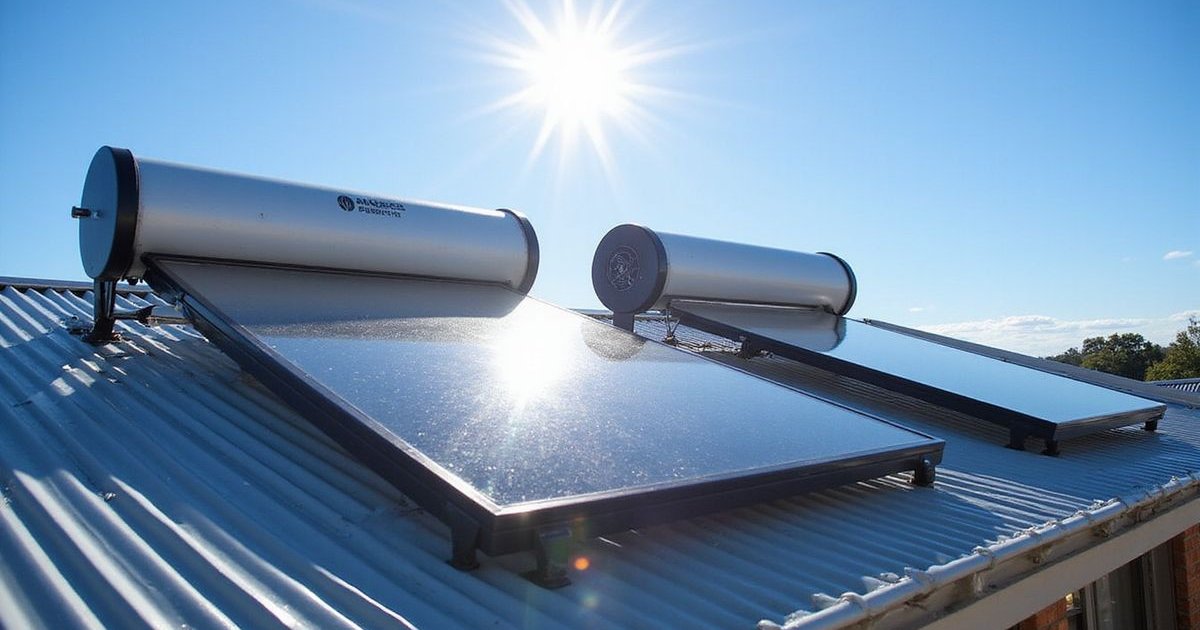
- Flat Plate Collectors: These operate like a car parked in the sun with the windows up. They trap heat inside a glass box to warm the pipes.
- Evacuated Tube Collectors: These function like a thermos flask. They use a vacuum seal to prevent heat from escaping back into the atmosphere.
Both methods generate hot water, but they react very differently to Perth’s specific weather patterns.
Flat Plate Collectors
Flat plate collectors are the workhorses of the Australian solar industry. You have likely seen these dark, rectangular panels on roofs across suburbs like Joondalup or Fremantle for decades.
How They Work
A standard flat plate collector relies on a simple, effective design:
- Absorber Plate: A sheet of copper or aluminium coated in a dark, heat-absorbing material sits inside the box.
- Riser Pipes: Water or a glycol fluid runs through copper pipes attached directly to this hot plate.
- Tempered Glass: A sheet of high-strength glass covers the box to create a greenhouse effect.
- Insulation: Rockwool or polyester batting sits behind the plate to keep the heat directed at the water.
Sunlight passes through the glass and heats the metal plate. This heat transfers instantly to the fluid inside the pipes.
Advantages of Flat Plate Collectors
Proven Durability in WA Conditions These systems are incredibly hard-wearing. The tempered glass is typically rated to withstand 25mm hail stones at 80km/h. This impact resistance is vital during those sudden Perth winter storms.
Cost-Effective Performance Manufacturing a flat box is less complex than creating a vacuum seal. Flat plate systems generally cost 15% to 20% less upfront compared to premium evacuated tube setups.
Ideal for High Solar Gain Perth averages around 3,200 hours of sunshine per year. Flat plates operate at peak efficiency when the sun is directly overhead and the air temperature is warm. This matches our local climate profile perfectly.
Lower Overheating Risk Because they lack vacuum insulation, flat plates naturally lose some heat to the air when they get too hot. This “heat loss” is actually a safety feature in our 40°C summers, as it prevents the system from reaching dangerous stagnation temperatures that can blow relief valves.
Disadvantages of Flat Plate Collectors
Efficiency Drop in Winter These panels rely partly on ambient air temperature. When the outside air drops to 5°C or 10°C on a July morning, a flat plate collector loses heat to the atmosphere faster than an evacuated tube system.
Roof Space Requirements You typically need more surface area to generate the same amount of energy compared to high-efficiency tubes. A standard family system often requires two large panels, taking up roughly 4 to 5 square metres of roof space.
Weight Considerations A full flat plate system with a roof-mounted tank (thermosiphon) places a significant static load on your roof timbers. The collector panels themselves are heavy due to the thick glass and metal casing.
Evacuated Tube Collectors
Evacuated tube collectors look distinct, consisting of a row of parallel glass tubes connected to a manifold at the top. They represent a newer generation of solar thermal technology.
How They Work
The engineering here is more sophisticated:
- Twin-Glass Construction: Each tube consists of two glass layers fused at the top and bottom.
- The Vacuum: The air is pumped out of the space between the glass layers.
- Heat Transfer: Inside the tube, a copper heat pipe contains a small amount of liquid which boils at a low temperature, turning to steam and rising to the manifold to heat your water.
This vacuum layer is the critical feature. Just like a high-quality coffee flask, it stops heat from escaping.
Advantages of Evacuated Tubes
Superior Cold Weather Performance The vacuum insulation means the outside temperature is almost irrelevant. Even if it is 2°C outside, the internal absorber can retain heat efficiently.
Passive Sun Tracking The cylindrical shape of the tubes allows them to catch sunlight from early morning to late afternoon. This “passive tracking” means they accept sunlight from more angles than a flat sheet of glass.
Flexible Installation We find these systems easier to install on difficult roofs. The lightweight individual tubes are clipped in one by one, making it easier for installers to navigate steep or high pitches.
Comparison Table: Key Feature Differences
| Feature | Flat Plate | Evacuated Tube |
|---|---|---|
| Hail Resistance | Excellent (Tempered Glass) | Moderate (Borosilicate Glass) |
| Winter Efficiency | Moderate | High |
| Summer Efficiency | High | High (Risk of overheating) |
| Roof Footprint | Large (Rectangular blocks) | Flexible (Scalable width) |
| Maintenance | Low | Low (Tubes easy to replace) |
Disadvantages of Evacuated Tubes
Stagnation and Overheating This is the biggest concern for Perth residents. Because the insulation is so good, the water in the manifold can easily exceed 95°C or even hit stagnation temperatures of 200°C+ if the pump stops during a heatwave. This puts massive stress on seals and valves.
Fragility While the borosilicate glass is strong, the individual tubes are more vulnerable to physical damage than a flat plate of tempered glass. A stray cricket ball or large hailstone is more likely to crack a tube.
Higher Upfront Investment The complex manufacturing process results in a higher purchase price. You are paying for technology that minimizes heat loss—a problem we do not suffer from as much as Tasmania or Victoria.
Perth’s Climate Considerations
Your location should dictate your equipment. Perth is located in Zone 3 for Small-scale Technology Certificates (STCs), which acknowledges our high solar radiation levels.
Why the Local Climate Matters
Summer Intensity We experience long stretches of days over 35°C. In these conditions, heat retention is not the problem; heat rejection is. Flat plate collectors naturally radiate excess heat, making them inherently safer for the system components during a heatwave.
Mild Winters Unlike Europe or North America, Perth winters are mild. We rarely see hard freezes that necessitate the extreme insulation of vacuum tubes. A standard flat plate system with frost protection valves is usually sufficient for our lows.
The Verdict on Weather Evacuated tubes are often “over-spec” for our climate. You are paying for insulation designed for freezing conditions while living in one of the sunniest cities in the world.
Performance Comparison
In Summer
Flat Plates: They perform exceptionally well. The high ambient temperature boosts their efficiency, and they naturally regulate their top-end temperature.
Evacuated Tubes: These are extremely efficient—sometimes too efficient. Without a specialized heat dissipation loop, they can produce water hot enough to trigger safety valves constantly, wasting water and stressing the tank.
In Winter
Flat Plates: You will likely rely on your electric or gas booster more often. On overcast days, their output drops significantly.
Evacuated Tubes: This is their time to shine. They can extract heat from weak winter sun more effectively than flat plates. A household with tubes might rely on their booster 15-20% less during July and August than a home with flat plates.
On Cloudy Days
Passive Tracking Advantage The round shape of the tubes captures diffuse light (light scattered by clouds) better than a flat surface.
Real-World Impact While tubes capture more energy on cloudy days, Perth has relatively few of them. The total annual gain from this feature is smaller here than in Melbourne or Sydney.
Cost Comparison
Pricing fluctuates based on STC values and installation difficulty, but we can provide current market estimates for 2025.
Purchase Price (Installed)
These figures represent a standard replacement for a 300L family-sized system.
- Flat Plate System: $3,800 - $5,800
- Evacuated Tube System: $4,800 - $7,500
Note: Prices include the deduction of STC rebates but exclude potential switchboard upgrades.
Running Costs
Booster Usage A 4-person household in Perth will typically spend between $150 and $300 annually on booster energy (gas or electric) to top up the water temperature.
The Efficiency Gap Evacuated tubes might save you an additional $40 to $80 per year on booster costs compared to flat plates. However, given the $1,000+ price difference upfront, the “payback period” for that extra efficiency can be over 15 years.
Maintenance Costs
Flat Plates: These systems are “set and forget.” Maintenance usually involves checking the sacrificial anode in the tank every 5 years and ensuring the glass is clean.
Evacuated Tubes: If a tube breaks, replacing it is cheap (approx. $50-$100 DIY), but the system has more potential failure points due to the high temperatures involved. Sensors and automatic air vents tend to fail faster in tube systems due to the extreme heat.
Which Should You Choose for Perth?
Choose Flat Plate If:
- You prioritize ROI: The lower upfront cost combined with Perth’s climate usually yields the fastest return on investment.
- You have ample roof space: You have a clear, north-facing roof section that can fit two large panels.
- You want durability: You prefer a system that is less likely to suffer damage from minor impacts or debris.
- You live in a high-heat zone: You are inland where summer temps consistently hit 40°C+.
Choose Evacuated Tubes If:
- Roof space is tight: You need high performance from a smaller footprint.
- Poor Orientation: Your available roof space faces East or West. The tubes’ passive tracking handles off-peak angles better.
- Structural Limits: Your roof structure cannot support the heavy, single-piece weight of flat plate panels.
- High Water Temperature Needs: You have a specific requirement for very hot water or hydronic heating support.
Our Recommendation for Most Perth Homes
Flat plate collectors are the clear winner for 80% of the homes we visit.
The logic is simple:
- They are built for our specific climate (hot, high radiation).
- They are significantly cheaper to buy.
- They offer 90% of the annual performance of tubes for 70% of the price.
- They are less prone to overheating issues in January and February.
Evacuated tubes are fantastic technology, but in Perth, they are often a solution looking for a problem.
Quality Matters More Than Type
A cheap evacuated tube system will fail faster than a quality flat plate system, and vice versa.
Regardless of the technology you choose, ensure your quote includes:
- Stainless Steel Tanks: Brands like iStore or Rheem Stainless offer longer lifespans than vitreous enamel (mild steel).
- Frost Protection: Even in Perth, a mechanical frost valve is smart insurance.
- Correct Sizing: An undersized system will rely on the booster too much, destroying your savings.
Get Expert Advice
At Hot Water System Perth, we stock and install both technologies because every home is different. We can inspect your roof orientation and current plumbing setup to give you a definitive answer.
Contact us today for a site inspection and a transparent quote on the system that actually fits your usage.